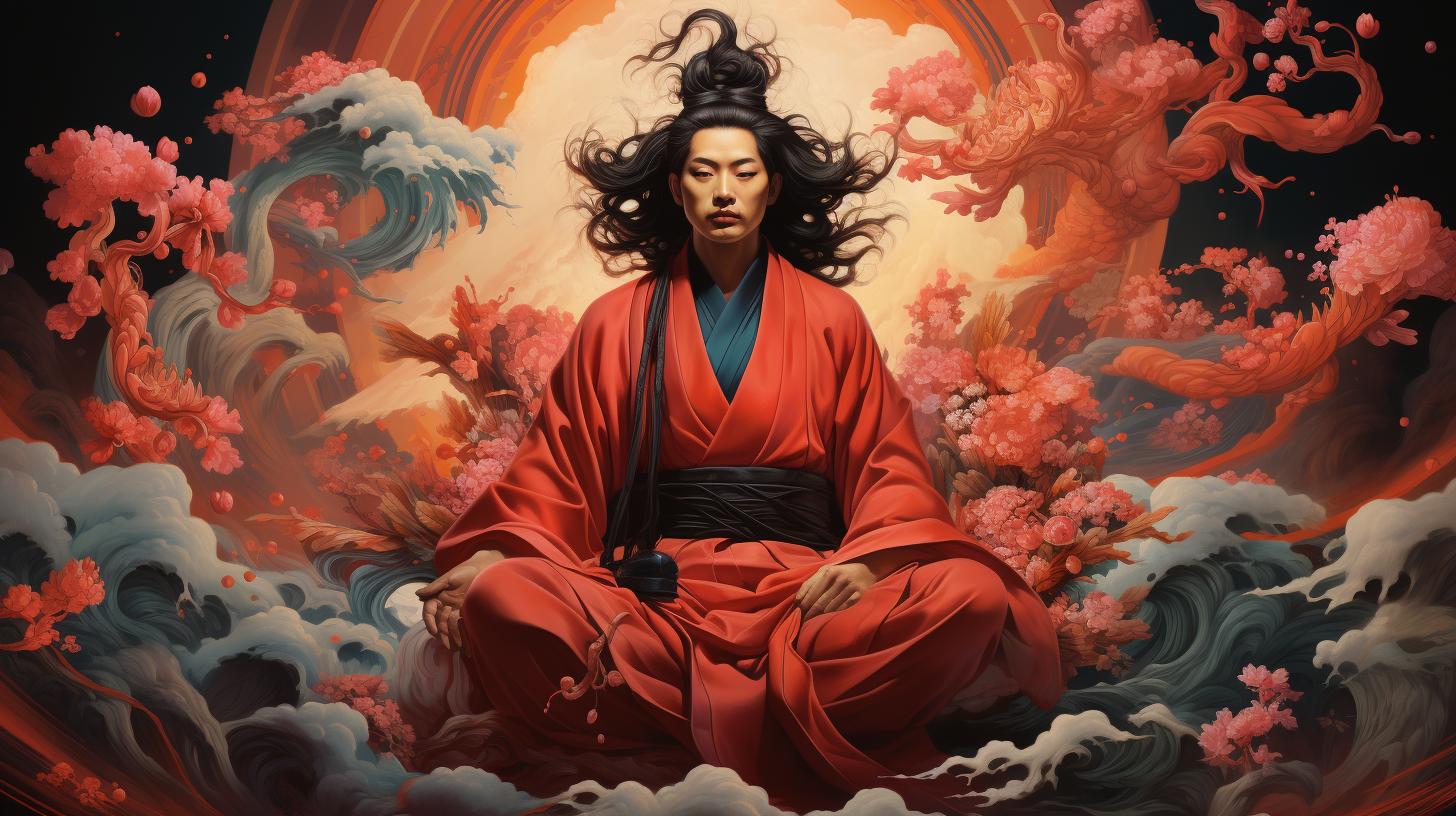
Asia
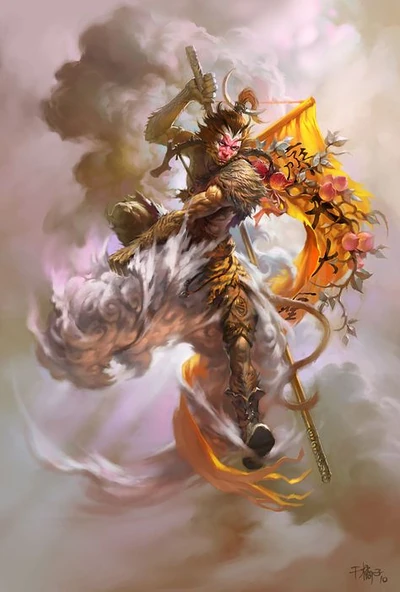
Assuming the Out Of Africa theory is correct our next stop in this journey would be Asia. In Asia, there are a couple of big names that stand out, those being China, Japan, and Korea. Each of these cultures has its trickster spirits or gods. In China, their trickster was a character named Sun Wukong who appeared in the novel “Journey to the West” written in the 16th century. He was born from a magical rock and gained immense power throughout his life. He had many abilities but the most notable were his ability to transform into 72 different animals and objects and his ability to manipulate the elements. He was known to be short-tempered and easily provoked which got him into many different tough situations. One of his greatest feats of trickery is when he snuck into a party for the gods and ate all of the peaches of immortality grown by the queen of the gods, Xiwangmu. He was then trapped under a mountain for 500 years by Buddha. Sun Wukong is similar in some ways to the Japanese spirits of trickery through their shared zoomorphism.
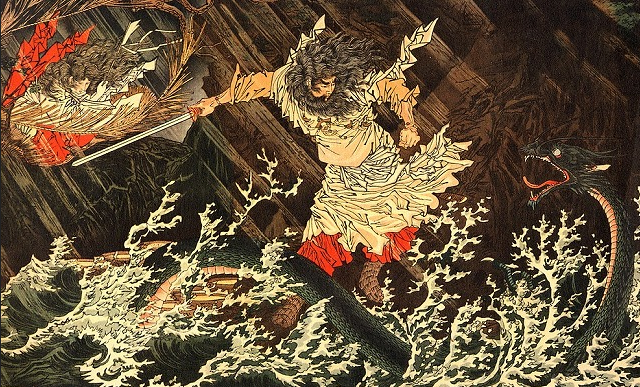
In Japan, they do have a god of trickery, named Susanoo-no-Mikoto, along with many chaotic spirits. Susanoo was the god of storms and often caused problems for humans and the other Shintō gods alike. He was banished to the ocean for one of his many stunts causing him to also become the god of the seas. Other tricksters within Japanese culture are more akin to spirits and less so gods. Two of these spirits are called the Tanuki and the Kitsune. The Tanuki is a mischievous spirit that can shapeshift. They can become a whole slew of creatures and objects but they favor an iron tea kettle when tricking humans. They also took pride in their ability to scare hunters by beating on their belly drums while hiding in the forest. Likewise, the Kitsune are known to trick humans for self-pleasure and usually cause pain, misfortune, and sometimes even death. Similar to most of the other tricksters in any religion, the Kitsune are shapeshifters and are known to take the form of humans, but their natural state is that of a fox with up to 9 tails depending on the age of the Kitsune. Unlike these spirits, in Korea, their trickster god was mostly seen in a human form.
In Korea, their god of trickery, Seokga, played a very large part in their creation myth. He became the first ruler of the world through deceit and cheating in competition with the true creator of the world, Mireuk. Although he stole the world from Mireuk he was the one who created humans and taught them how to make fire and how to find water. In most texts, Seokga crafted a second sun and moon but after releasing them into the sky he realized they made the days too warm and the nights too cold. Seeing this he crushed the second sun and moon and used the dust to create the stars. Korean culture also has its form of trickster spirit called Dokkaebi. Unlike most other spirits the Dokkaebi have a special ability to speak with humans. They are considered demons or goblins, but their tricks are often playful and silly. These three cultures all have trickster spirits which are mostly unique to Asia, but as humans kept spreading throughout the world we could see fewer and fewer spirits and more gods being credited with the trickery and misfortune in the everyday lives of humans.